- ENEYE PHARMA- Eye Drops PCD Pharma Franchise Company in PAN India.
- +91 9216295095
- eneyepharma@gmail.com

Logging into OKX Web3 and Spot Trading: A Practical, No-BS Guide
Kostenlos Spielen Hyper Burst Freispiele Ohne Einzahlung
April 20, 2025Roulette Setzstrategie
July 26, 2025Logging into OKX Web3 and Spot Trading: A Practical, No-BS Guide
Whoa! The first time I tried to sign in to OKX I felt like I was unlocking a secret clubhouse. Short and messy excitement. But also a little nervous—because remember, this is crypto and things move fast and sometimes weirdly. My instinct said go slow; something felt off about clicking through without double-checking. Initially I thought a login was just a login, but then realized the web3 layer changes the rules and the UX can hide important security steps.
Okay, so check this out—if you’re a US-based trader who wants to use OKX’s web interface and jump into spot trading, you need two things: a clear path to sign in and a mindset for security. Seriously? Yes. The basics are simple: username/email, password, and then your two-factor authentication (2FA). But the details matter. On one hand, the platform aims to be user-friendly; though actually, the transition between web3 wallet connectivity and classic account sign-in can trip people up, especially if you’re used to centralized exchanges only.
Here’s what bugs me about many walkthroughs: they assume you know what a web3 wallet connection implies. Hmm… it’s not the same as signing in with email. A simple email/password combo logs you into your OKX account history, margin settings, and fiat rails. Connecting a web3 wallet (like MetaMask or OKX Wallet) is instead authorizing wallet-based transactions and wallet-managed assets—different permissions, different risks. I learned this the hard way when I almost approved a signature that would have granted contract-level access… yikes.
First practical step: navigate to the official OKX login page. Don’t guess. Type the URL or use a trusted bookmark. Wow! Always check the domain and SSL lock. Phishing is real, and very very common. If your browser warns you, stop. If somethin’ smells phishy, close the tab and breathe.
Signing in: Web Login vs. Web3 Wallet Connection
Let me walk through the difference plainly. When you sign in via email and password, OKX uses account-based authentication and links to your KYC, order history, and fiat on/off ramps. When you connect via a web3 wallet, you’re primarily granting the wallet the ability to interact with dApps and sign transactions—this is more about on-chain activity than custodial services. Initially I thought they’d be combined seamlessly, but actually, wait—let me rephrase that: they can be combined, but you need to know which layer you’re operating on at any moment.
To connect a web3 wallet: click the wallet icon or “Connect Wallet” on the OKX site, choose your wallet (OKX Wallet, MetaMask, WalletConnect, etc.), and confirm the connection in your wallet app. Keep an eye on the permission prompt. Don’t blindly sign every message. Some prompts are harmless; some request broad approvals that could let smart contracts move your tokens. My gut says: read the prompt. Seriously. Even if it’s tedious.
Tip: Use a hardware wallet for large balances. It’s extra hassle, but worth it. On the other hand, small daily trading balances in a hot wallet are convenient for spot trades. It’s a trade-off between convenience and safety—no magic answer. I’m biased toward more security, personally.
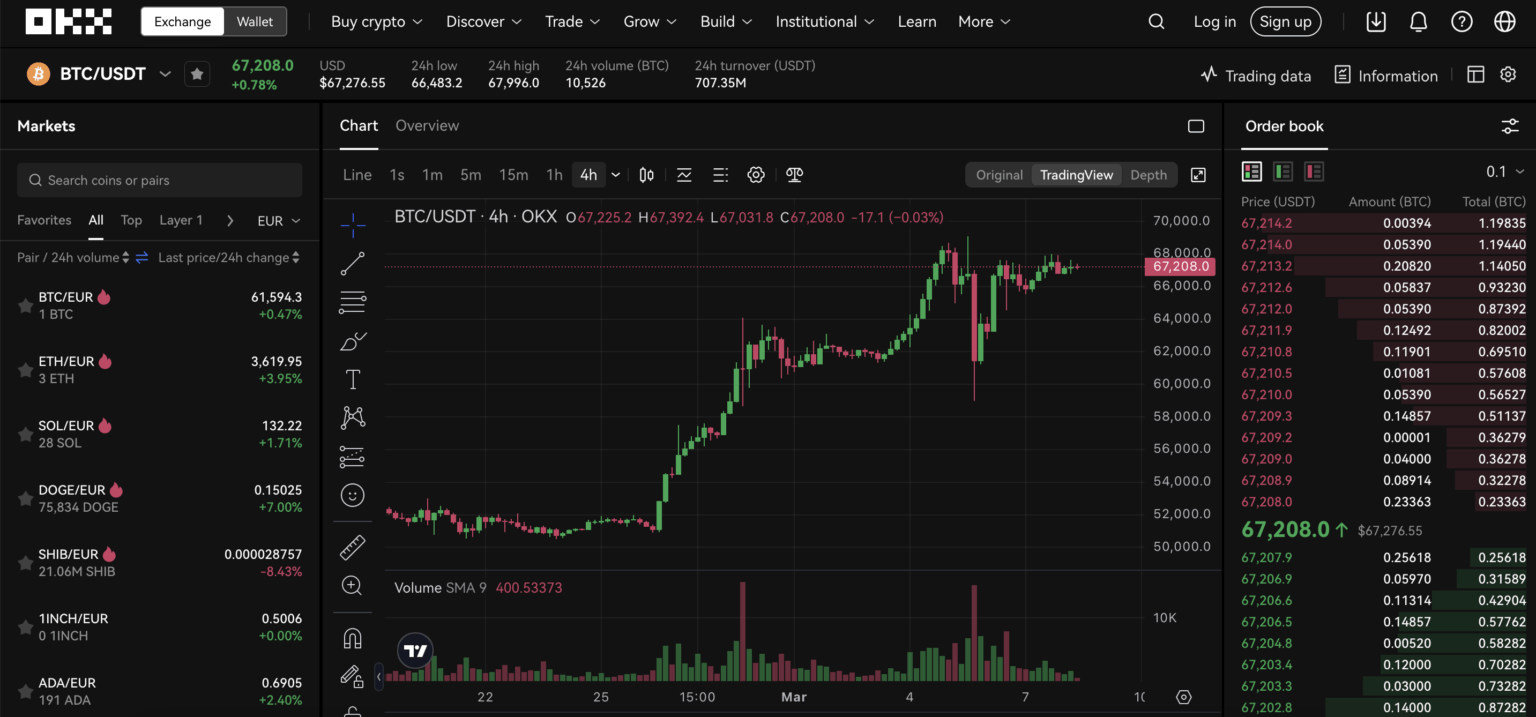
Spot trading itself is straightforward: pick the trading pair, set your order type (market or limit), size your order, and confirm. But those who rush often forget to check fees, price slippage, and whether the order executes on the right market (US vs global). Hmm… slippage can eat your gains, especially on low-liquidity pairs. So set sensible limits and watch the order book for big walls.
Security checklist before you trade: enable 2FA (preferably an app, not SMS), confirm withdrawal whitelist if you can, and set up email alerts. Also double-check any API keys you generate—restrict IPs and permissions (read-only if testing). Oh, and don’t reuse passwords. I know it sounds like a lecture, but I’ve seen accounts drained because someone used the same password across sites.
One practical anecdote: I once connected my wallet to a third-party dApp promising yield farming via OKX’s web3 tools. It looked legit, had decent UX, but the contract required token approvals across multiple scopes. My instinct said no, so I tested with a tiny amount first. Good decision—there was a hidden approval that would have allowed token transfers. That little test saved me from a headache.
Trade execution tips: use limit orders if you’re not in a rush. Market orders are fine for liquidity-rich BTC/USD trades, but for altcoins or volatile moments they’ll cost you. Watch depth charts and beware of wash trading bots during low-volume windows. If you’re scalping, set really strict stop losses and monitor latency—your internet and device performance matter more than you think.
Account recovery: store your seed phrases and backup codes offline. Write them down (yes, physically). Put them in two secure places if you’re managing significant funds. Don’t store seeds in cloud storage. Don’t email them to yourself. Seriously—don’t. If you lose access to your OKX account and your wallet seed is gone too, recovery options are limited.
On the regulatory side: US users should be aware of KYC and potential restrictions on certain markets or features. OKX has been evolving its compliance posture; that influences available products. On one hand, tighter compliance helps long-term legitimacy; though actually it can be a hassle for privacy-focused traders. Balance your priorities and know the trade-offs.
Finally, a quick workflow I use: (1) bookmark OKX login, (2) sign in with strong password + 2FA, (3) connect hardware wallet when moving big funds, (4) use small test trades for new pairs, (5) withdraw profits to cold storage. Simple steps, repeated, and they compound into safer habits. I’m not 100% perfect, but this routine has kept me from losing anything major.
FAQ
How do I know if I’m connecting to the real OKX site?
Check the URL and SSL certificate. Use a bookmark you created yourself. Verify the domain carefully and avoid links from random DMs. If you get unexpected pop-ups asking for seed phrases, that’s a red flag—close the page.
Should I use a web3 wallet or a standard OKX account for spot trading?
Use the standard account for centralized features (fiat, order history, margin) and a web3 wallet when you need on-chain interaction. They’re complementary. For high-security needs, pair a hardware wallet with your OKX account where possible.
Where can I find the official OKX login help?
For step-by-step instructions and troubleshooting, visit the platform’s official guidance at okx. That resource helped me when I ran into a weird 2FA sync issue, so check it out if you need specifics.
